
January 14, 2025
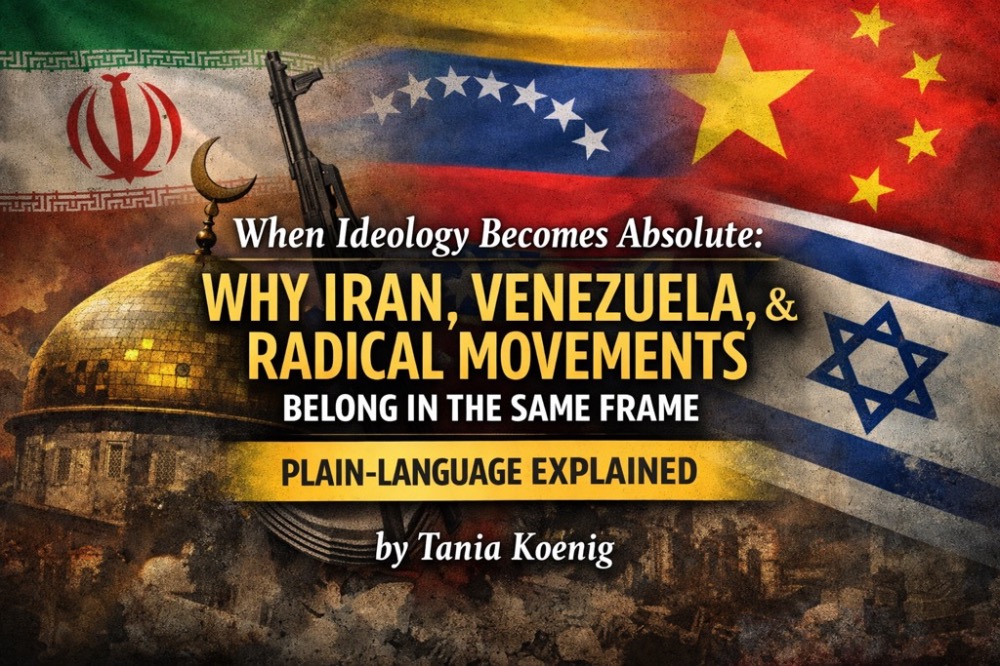
A plain-language explanation of the same argument, written to help readers follow the reasoning step by step.
Many people sense that something is deeply wrong in the world, yet struggle to understand why certain regimes and systems do not fall even when they are widely opposed, exposed, or resisted. History shows that systems of power do not collapse easily, and they do not collapse simply because people protest, leaders die, or truth is spoken publicly. Systems fall only when their right to rule is removed.
The Bible calls this authority. History often calls it legitimacy. As long as a system retains permission to rule, it adapts, represses, and survives, even when it is morally bankrupt and widely hated.
When we speak about a system losing its right to rule, the Bible explains this using courtroom language, because above all earthly governments there is a higher court, the court of heaven, where God Himself is Judge over rulers and authorities. Scripture describes this plainly, saying that thrones were set in place, the court sat, and the books were opened (Daniel 7:9–10), showing that decisions about authority, permission, and judgment are rendered before they appear in history. In this light, prayer is presented in Scripture as a lawful approach to God’s court, where believers stand on covenant, bring God’s own word before Him, and ask for righteous judgment, restraint of evil, and the removal of illegitimate authority, after which events on earth begin to realign with what has been decided.
This helps explain why systems can look strong long after they have lost moral credibility.
Iran is a clear example. Many Iranians oppose the regime. Many suffer. Many protest peacefully and courageously. Yet the system remains, not because it is loved, but because it still holds authority. That authority is not only political; it is ideological and spiritual. Until it is broken, the system continues to adapt and survive.
This pattern is not unique to Iran.
Fidel Castro eventually died, but the system he built did not collapse when he died. The Soviet Union did not fall the moment people stopped believing in communism; it continued for years after belief had already collapsed. Venezuela followed the same path. Protests came and went. Leaders changed. Sanctions increased. Yet the system endured because the structure itself had not yet fully lost its right to govern.
This is why the comparison between Iran and Venezuela matters. The comparison is not moral, cultural, or emotional. It is structural.
Venezuela helps us see the structure clearly because its system is formally secular and ideologically atheistic. It does not claim authority from God or Scripture. It claims authority from revolutionary morality and state power. That allows us to see the mechanism of control in isolation: centralized authority, moral absolutism, suppression of dissent, and endurance despite failure.
Iran shows the same structure fused with a clerical theocracy rooted in a fundamentalist revolutionary interpretation of Shi’a Islam. In that system, political power claims divine legitimacy, merges religion with coercive government, and includes the destruction of Israel and the seizure of Jerusalem as part of its ideological mandate. The language is different, but the structure is the same.
These systems do not care whether people believe in God or not. They are not restrained by atheism, and they are not corrected by religion. Iran works with atheist communist China, Marxist Venezuela and Cuba, and secular authoritarian regimes, and cooperates with groups such as Hezbollah and the Muslim Brotherhood across theological differences, because what unites them is not belief but power. They oppose the same things: limits on authority, accountability, freedom, and Israel, which represents covenant and the idea that power itself answers to God.
This is why atheism does not protect people from these systems, and religion does not restrain them. Once an ideology becomes absolute, it crushes dissent regardless of belief. This is exactly what Scripture means when it says our struggle is not against flesh and blood, but against rulers, authorities, and powers (Ephesians 6:12). Ordinary people are not the enemy. The system is.
The Bible already gives us a clear picture of how such systems are confronted, and it is found in the book of Esther.
In Esther’s time, the danger was not only Haman. The real threat was a legally authorized decree that allowed destruction. Even after Haman was exposed and killed, the danger did not automatically disappear, because the decree was still in force. What changed was permission. Through fasting and lawful appeal, the decree was overturned. Only after that were the people legally allowed to stand and defend themselves (Esther 4–9). Prayer came first. Action followed after legality changed.
This same pattern appears throughout Scripture.
Moses did not respond emotionally after the golden calf. He appealed to covenant, promise, and God’s reputation among the nations, and the stated judgment was withdrawn (Exodus 32:9–14). Daniel prayed when he understood that the appointed time was ending, and his prayer released angelic enforcement even though resistance delayed manifestation (Daniel 9–10). In every case, prayer addressed authority first. History followed.
This helps us understand the present moment.
The Iranian people are not the enemy. They are not violating Scripture by standing peacefully for freedom. They are responding within a moment where authority is being challenged and permission is shifting. The Church’s role is not to incite violence or control outcomes, but to pray so that illegitimate power loses its right to continue, bloodshed is restrained, and justice can emerge without chaos.
This is why Jesus spoke of binding and loosing (Matthew 16:19; 18:18), and why Paul described spiritual conflict as engagement with rulers and authorities rather than people (Ephesians 6:12–18). Prayer, in this sense, does not replace human action; it makes righteous action possible.
Romans 4:17 must be read in this light as well. Calling into existence what does not yet exist is authoritative speech aligned with what God has already decided. Prayer does not invent outcomes. It removes resistance.
When the Church prays in this manner, people still act. But they act under a different covering. History moves—sometimes slowly, sometimes suddenly—but never without cause.
This is how the Church responds.