
March 16, 2026
The Iran war may already have achieved its strategic objective. The danger now is turning success into escalation.
The war involving Iran, Israel, and the United States may already have achieved its central strategic objective. The real danger now is that continuing the conflict could transform victory into escalation.
The opening phase of the war accomplished something many analysts believed would take far longer. Iran’s missile infrastructure has been struck. Military installations have been destroyed. Parts of the nuclear program have been pushed back. The network of proxy groups that allowed Tehran to pressure Israel and challenge the United States across the region has been seriously disrupted.
These were not secondary targets. They were the core elements of Iran’s regional strategy.
For decades Tehran invested enormous resources in a system designed to surround Israel and extend its influence beyond its borders. Hezbollah in Lebanon, militias in Iraq and Syria, missile programs capable of reaching multiple countries, and a nuclear pathway intended to deter outside intervention formed a single strategic structure. The current war struck directly at that structure.
That is why the most important question now is no longer whether the campaign produced results. The real question is what happens if the war continues beyond its original purpose.
Military strategy has long recognized a simple principle: wars become dangerous when they continue after their primary objective has already been achieved. The initial success of a campaign can create a false sense that momentum must be maintained indefinitely. In reality the opposite can be true. The moment after victory is often the moment when escalation begins.
The Persian Gulf illustrates this danger clearly.
The Strait of Hormuz is not simply a regional shipping route. It is one of the central arteries of the global economy. A significant share of the world’s oil supply moves through that narrow passage. Even temporary disruption to that corridor can send immediate shockwaves through energy markets, transportation systems, and inflation across multiple continents.
If the war expands into a prolonged confrontation around the Gulf, the consequences will not remain confined to the battlefield. Oil prices will move. Shipping insurance costs will spike. Global supply chains will tighten. What begins as a regional war could quickly become an international economic crisis.
This is not speculation. Markets have already reacted to the instability.
Another reality that must be acknowledged is geopolitical competition. When the United States becomes heavily engaged in one theater, other powers watch carefully. Strategic planners know that prolonged conflicts can create opportunities elsewhere. A war that consumes attention and resources in one region can encourage movement in another.
That is why wars must always be evaluated through a wider lens than the battlefield alone.
The internal political situation in Washington also matters. Military campaigns unfold inside a political system where congressional majorities, elections, and public opinion shape how long a war can realistically continue. When President Trump entered office the governing majority in the House was larger. Today that margin has narrowed dramatically. Special elections have changed the balance, leaving the political situation more fragile than before.
In that environment a prolonged war combined with economic pressure could quickly become politically unstable.
This does not diminish the military achievements that have already occurred. On the contrary, it highlights their significance.
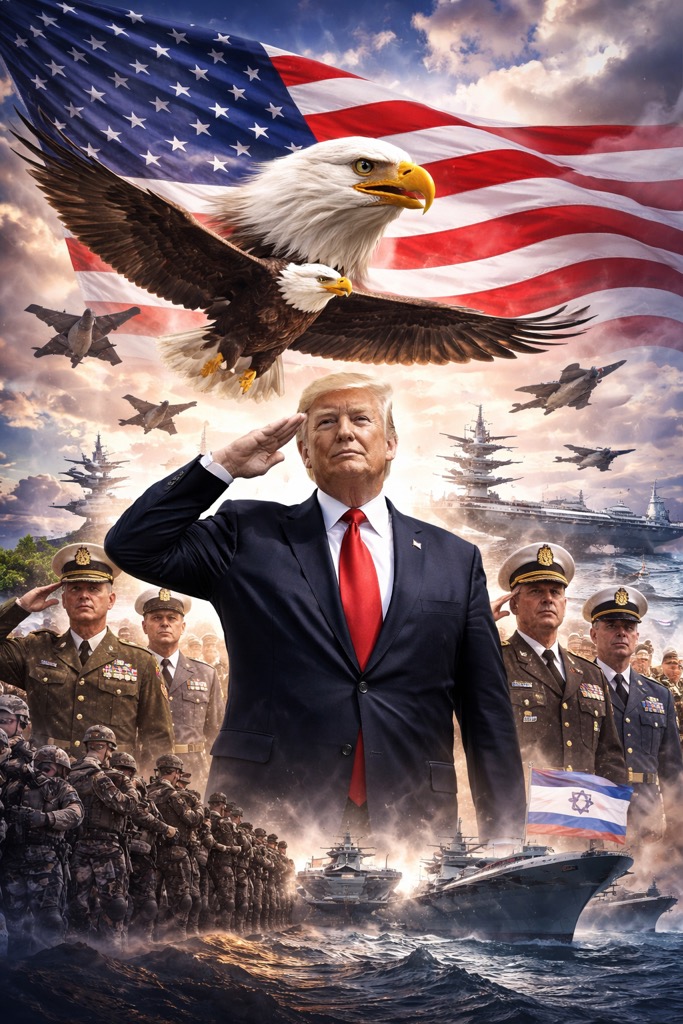
President Trump confronted a regime that for decades built one of the most complex regional pressure systems in the Middle East. Through missiles, proxies, and strategic intimidation Iran attempted to surround Israel and challenge American influence without direct confrontation. Acting together with Israel, the United States struck the heart of that system.
The results are visible.
But successful campaigns require more than decisive strikes. They require judgment about when the objective has been reached.
Another reality often overlooked in American discussions is the nature of NATO itself.
In theory NATO represents a powerful alliance of Western nations. In practice its political structure often makes rapid military decisions difficult. European governments operate through parliamentary systems and coalition politics. Military deployments must pass through debate, legal review, and political negotiation before forces can be committed abroad.
Anyone who has lived inside Europe understands how slow this process can be.
During my years in the Netherlands I watched how parliamentary debates about overseas deployments could stretch for months. When a final decision was reached the contribution might consist of a small number of aircraft or a limited support unit. From a European perspective this is simply democracy operating through consensus. From Washington’s perspective it can appear as hesitation at moments when rapid action is required.
This difference in political culture explains why the United States repeatedly carries the largest operational burden when crises erupt outside Europe.
European allies do participate in coalition operations. Thousands of European soldiers fought alongside American forces in Afghanistan. NATO missions in the Balkans also involved multiple allied countries. Yet the structural reality remains: when decisive military action is required the United States usually provides the backbone of the operation.
President Trump raised this issue directly when he asked whether allies would respond with the same urgency if the United States itself were under threat.
That question remains unresolved.
Which brings us back to the present conflict.
The objective of the war was to neutralize a strategic threat. If that threat has been significantly degraded, then the responsible task of leadership becomes preserving the strategic gains rather than risking them through prolonged escalation.
History shows that wars are not won simply by continuing to fight. They are won when leaders recognize that the objective has been achieved and prevent the conflict from expanding into something larger.
Strength wins battles.
Judgment determines when the war is truly over.