
May 10th, 2026
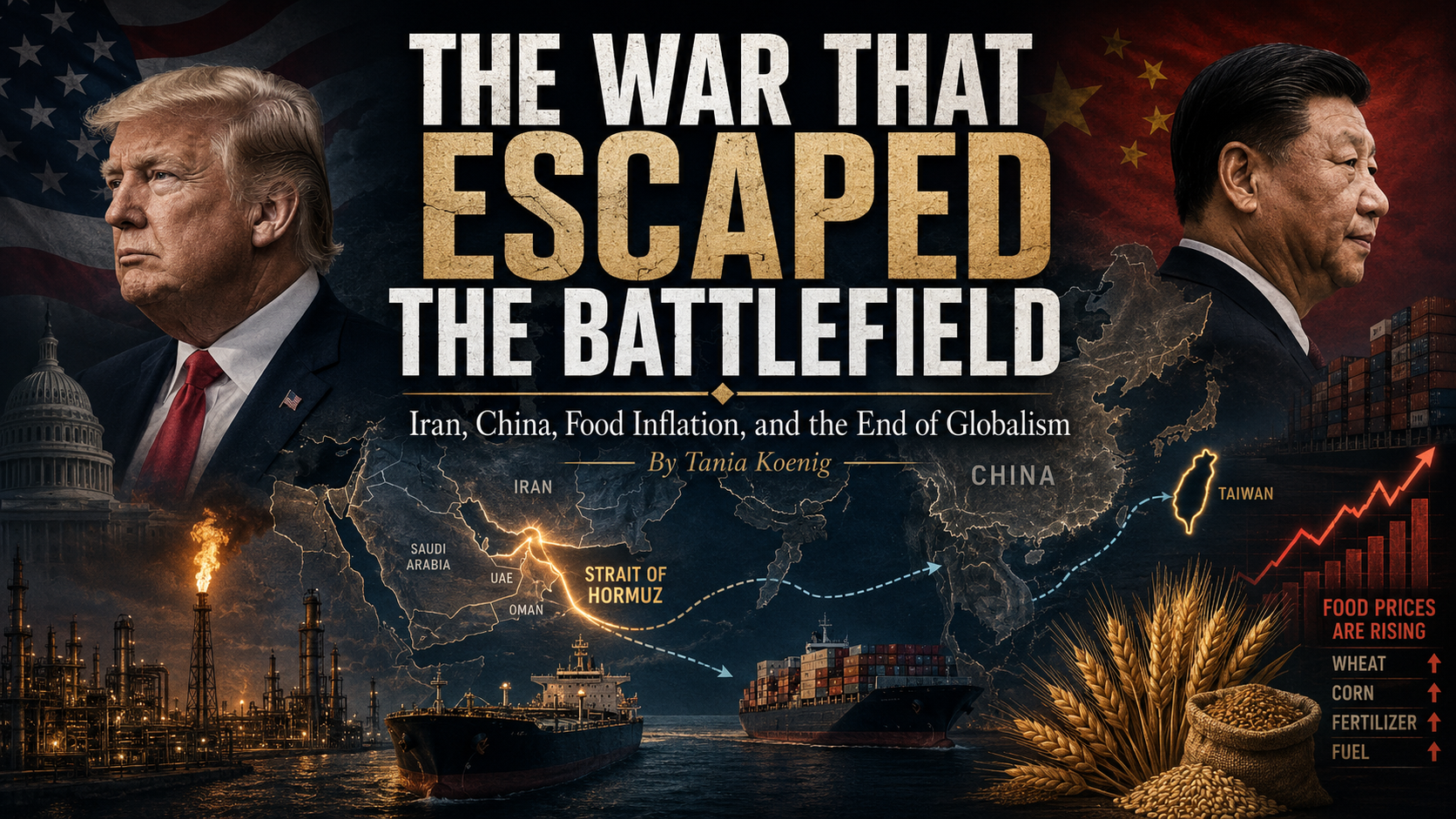
Preident Trump’s visit to Beijing this week comes at a moment of unusual pressure for Washington. The Iran war has not delivered the quick political result the White House expected. Tehran has not collapsed, and the Strait of Hormuz has become leverage. Gulf states are reassessing the limits of American protection, while oil, fertilizer, food prices, shipping insurance, Taiwan, rare earths and China’s bargaining power are now part of the same crisis.
The war was misunderstood from the beginning. President Trump appears to have believed Iran could be forced into submission through pressure, air power, sanctions and political shock. The assumption was that American force could still impose a political outcome. Iran answered by absorbing the strike, extending the conflict and pushing the cost into the global system.
That was the central miscalculation.
Iran is not Iraq, and it is not Venezuela. It is a mountainous, historical, religious and strategic nation with institutions, ideology, patience and a long memory. More importantly, it is a regime that has spent decades preparing for confrontation with the United States and Israel. Since 1979, Iran has built not only a military, but a survival system: missiles, drones, underground facilities, proxy networks, maritime pressure and the ability to threaten Hormuz. America can strike Iran, but it cannot easily win Iran.
This is also why the war is unlikely to end quickly. Iran has not built its strategy around a short confrontation. It has prepared for a long one. Tehran can absorb pressure, use proxies, threaten Hormuz, strike or pressure Gulf infrastructure, wait out political cycles, and make the cost of the conflict spread through the global economy. Washington may still be looking for a decisive outcome, but Iran is fighting for duration. The consequences — inflation, food pressure, Gulf insecurity, Chinese leverage and regional escalation — may continue to unfold for years, not weeks.
Iran is not fighting a conventional war. It is fighting through pressure on the system America built and on the countries that depend on that system. Tehran does not need to defeat the U.S. Navy or occupy another capital. It can use Hormuz, missiles, drones, proxies, maritime disruption and direct pressure on Gulf infrastructure to raise the global cost of the conflict. Its strategy is to make the war too expensive to contain: threatening shipping routes, pressuring energy assets, exposing Gulf cities and ports, and forcing nations to calculate their own losses.
Iran is not only trying to survive. It is trying to damage the petrodollar bargain itself — the old arrangement in which Gulf oil moved under American protection, priced through the dollar system, while Gulf states relied on Washington for security. If that trust breaks, the consequences reach far beyond the battlefield.
Once Hormuz was threatened, the war changed character. It moved from military targets into energy markets, shipping insurance, fertilizer costs, food production and inflation. A conflict that began as a military campaign became a test of the global system’s most fragile arteries. A disruption in Hormuz does not remain at sea. It reaches the farm, the port, the grocery store and eventually the household budget.
Having spent two decades in agriculture, I know this chain is not theoretical. Food production depends on diesel, fertilizer, water, labor, credit, timing, transport and stability. When fuel and fertilizer rise together, the farmer sees the crisis before the consumer sees it in the grocery store.
Inflation is therefore not a secondary issue in this war. It is one of the ways the conflict spreads. Families feel it before governments admit it. Farmers calculate it before economists explain it. Poor countries absorb it before rich countries begin to worry. Farmers are already facing another surge in fertilizer costs. Planting decisions are changing, and global food production is being placed under pressure at the same time energy markets are unstable. Developing nations will be the most exposed because they have less room to absorb higher food, fuel and fertilizer prices.
The consequences could move far beyond the cost of groceries. If fuel rises, food rises. If fertilizer rises, yields fall. If yields fall, fragile countries break first. When fragile countries break, people move. The migration crisis the world has already seen may be small compared with what comes if energy, fertilizer, water and food systems come under pressure together. People will move because they need bread, water, work and safety, and the same governments that helped create the conditions will call the migrants the crisis.
The Gulf states understand the danger. For decades, the arrangement was clear: oil would move through the American-led order, and America would protect the region. That bargain helped sustain the petrodollar system and the confidence behind the Gulf’s ports, airports, financial centers and sovereign wealth funds. The Iran war has damaged that confidence. Gulf states have seen that hosting U.S. bases does not guarantee immunity. They have also seen that alignment with Washington can make them targets. The old security bargain — bases, radars and troops in exchange for protection — has been exposed as more fragile than the region was told to believe.
This is not a small diplomatic problem. Trust in protection is the foundation of American influence in the Gulf. Once that trust is shaken, the regional order begins to adjust. Gulf capitals may speak carefully in public, but every government is calculating. Iran has survived, and the old assumption that Washington alone can guarantee the region’s order is no longer enough.
China is moving carefully into that space. Beijing does not need to enter the war directly to benefit from it. It can present itself as a stabilizing power while expanding its influence with both Iran and the Gulf. Saudi Arabia and the UAE are already deepening defense and technology cooperation with China, especially in drones, surveillance systems and military equipment. This is not waiting for “after the war.” There may not be a clean “after” for years.
It is happening now because the war has already shown the Gulf that American protection has limits. After watching assets, energy routes, airspace, ports and cities become vulnerable, Gulf states are looking for additional security guarantees. China offers weapons, technology, infrastructure and diplomatic access to Tehran without the same language of political conditions. If American protection appears limited, the Gulf will diversify now, not later.
Russia will also involve itself. Moscow sees the conflict through the same anti-U.S. strategic frame that shapes its war in Ukraine: resistance to American dominance, sanctions, NATO pressure and the Western-led order. Iran’s survival matters to Russia because it weakens the image of American inevitability. China will involve itself because energy, Hormuz, Iran and Gulf security all touch its own survival as an industrial power. Turkey will not remain passive either. Turkey sits between Europe, Russia, the Middle East and the Islamic world, and it will seek leverage, influence and position as the old regional order weakens. The Middle East is no longer being organized only around Washington.
That is why Trump’s meeting with Xi Jinping matters. The Beijing summit is expected to address Iran, trade, Taiwan and rare earths, but it comes under the shadow of an unfinished war and a larger question: can the United States still force the global order back into position when its military power does not immediately produce the political result it expected?
China is central because it is the power most affected by the map. It needs energy, secure sea lanes, the Gulf, Hormuz and Malacca. Its industrial strength depends on fuel, minerals, shipping and access. American power has always rested heavily on the sea: aircraft carriers, chokepoints, sanctions, insurance, naval routes and permission. If Washington can pressure Hormuz and threaten Malacca, China faces a strategic vulnerability. But China is not helpless. It has rare earths, manufacturing capacity, patience and leverage of its own, and its rare earth controls have already exposed vulnerabilities in U.S. automotive, aerospace and defense supply chains.
Trump therefore arrives in Beijing with pressure, but also with need. That is the uncomfortable reality behind the summit. A superpower prefers to command. When it must ask, the world notices.
Taiwan is the danger sitting behind the meeting. If America remains absorbed in the Middle East, China will ask how much American power is still available in the Pacific. A prolonged Middle East war drains attention, weapons, diplomacy and political will. If Trump needs Xi’s cooperation on Iran, Taiwan becomes more exposed. China does not need to move tomorrow for the strategic window to change. Beijing can measure American distraction, overextension and dependency. It can watch how Washington manages Iran, how the Gulf reacts, how allies hesitate and how much the United States is willing to soften in one theater to gain help in another. China may not need to rescue Iran. It only needs to learn from Iran.
The Western Hemisphere belongs in the same analysis. The United States is trying to restore dominion through seas, chokepoints, sanctions, critical minerals, energy and industrial capacity. Brazil, Venezuela, Greenland, Canada, Mexico and the Caribbean are not side stories. They are part of the resource map. Brazil matters because it has rare earths, agriculture, water, oil, land and strategic weight. Lula’s White House visit belongs inside this same picture. In this new environment, Brazil is no longer merely a regional actor. It is part of the global contest over food, minerals and sovereignty.
Venezuela means oil. Brazil means minerals, food and land. Greenland means Arctic access and resources. Canada means energy and geography. Mexico means labor, manufacturing and border control. The Caribbean means naval position. This is not isolationism. It is American power trying to secure its hemisphere before negotiating with China and pressuring the rest of the world.
This is the Trump era. Globalism is no longer the operating system it was sold to be. The old language remains — cooperation, institutions, allies, rules — but the reality has changed. The world is moving toward national survival, strategic autonomy, resource control, military production, food security and energy independence. Countries are learning that they must be able to feed themselves, fuel themselves, defend themselves and produce what they cannot afford to lose.
The old alliance structure will also change. NATO will not disappear overnight, but the era of automatic dependence on American protection is weakening. Europe is already being pushed to defend more of itself. France’s argument for strategic autonomy is no longer theoretical. Gulf states are rethinking their security assumptions. Asian allies are calculating the consequences for Taiwan. The result is not a more peaceful world. It is a more fragmented one.
The old globalism was sold as openness, efficiency and integration, but the war has revealed the dependency underneath: chokepoints, shipping insurance, sanctions systems, the dollar, fertilizer flows, energy routes and one dominant navy expected to keep order. That system is now being weaponized. A strait can threaten food. A blockade can raise fertilizer. A sanction can freeze assets. A war can change insurance costs. A navy can decide who moves and who waits. That is not freedom. It is dependency under the language of freedom.
Iran understands this contradiction. Tehran did not offer surrender in its response to Washington. It demanded recognition from a position of survival: sovereignty over Hormuz, sanctions relief, unfreezing of assets and an end to terms it viewed as surrender. Iran was saying that if Washington wants oil to move, Hormuz to breathe and the global economy to calm down, it must negotiate with the country it expected to break. Trump rejected the response because he wanted victory. Iran offered reality.
A quick war gives a president a speech. A long war gives the world time to count the cost. Those costs are now spreading into food, inflation, Gulf security, China’s Taiwan calculations, Europe’s defense posture, Russia’s involvement, Turkey’s ambitions and the resource map of the Western Hemisphere.
If America remains absorbed in the Middle East, East Asia will draw its own conclusions. If Trump needs Xi’s cooperation on Iran, Taiwan becomes part of the strategic calculation. If Asian allies are asked to carry more of the burden, North Korea will also calculate. If the Gulf doubts the old American guarantee, it will look for additional security partners. Power does not always shift through one decisive battle. Sometimes it shifts when governments begin to see that the old protector cannot protect everything at the same time.
Above all of this sits Israel, the most dangerous emotional and prophetic layer of the war. Iran is not treated by Israel as an ordinary adversary. It is framed as an existential threat. Once war enters that language, restraint becomes weakness, diplomacy becomes betrayal and escalation becomes survival.
This is where politics begins to touch prophecy. Armageddon is not merely a word from Revelation. It becomes a way of thinking, a collapse of restraint, a belief that destruction has meaning and suffering is proof. Leaders are gambling with oil, food, water, currencies, borders, sons, surveillance and hunger while speaking the language of destiny.
Trump goes to China this week because the Iran war has outgrown the battlefield. Iran has not collapsed. Hormuz has become leverage. The Gulf has learned that American protection has limits. China has rare earths and patience. Taiwan is more exposed. Brazil has resources. Europe is preparing for more self-defense. Russia is moving toward the table. Turkey will look for its opening. Farmers are watching fertilizer. Families are watching food.
The official story will be the Beijing summit. The deeper story is that globalism is over as the world knew it. A harsher order is replacing it — one built on production, protection, scarcity and power.
The United States can still project enormous force. That is not in question. The harder question is whether American force can still produce the political result Washington expects. That is what China is studying, what the Gulf is reconsidering, what Taiwan is watching, what Europe is preparing for, what food markets are beginning to price, and what the old global order is struggling to hide.
Nations are beginning to be shaken and reshaped not only by missiles, but by inflation, food shortages, energy pressure, broken trust, and the return of raw power. The war has escaped the battlefield, and the world is only beginning to feel what that means.
Maranatha. Come, Lord Jesus.