
By William Koenig, White House Correspondent
May 22-23, 2026
JUST IN: Trump says US, Iran have 'largely negotiated' agreement tied to Strait of Hormuz reopening - Truth Social
Since April 8th, the last day of any meaningful U.S. military action prior to the call for a ceasefire, Iran has steadily gained negotiating leverage while President Trump had relied primarily on major military warnings, increased deployments, and extreme ineffective rhetoric.
For more than six weeks, American ships have remained deployed at sea, fighter jets have continued operations throughout the region, and warnings have repeatedly come from the White House and Pentagon. Yet from Tehran’s perspective, little has materially changed on the battlefield. Iran’s leadership, masterful at delaying negotiations, were increasingly convinced that Trump wouldn’t take decisive actions.
The bottom line is that the Iranian IRGC leadership and the regime’s extreme religious establishment were not concerned about the suffering of the Iranian people. Internal dissent is often met with arrests, harsh punishment, public intimidation, and in some cases execution. The regime’s priority is survival, strategic leverage, and maintaining regional influence.
At the same time, Iran continues re-equipping its military infrastructure, improving missile delivery systems, and strengthening asymmetric capabilities throughout the region.
Tehran has continued issuing threats against Sunni Gulf nations aligned with the United States, including Saudi Arabia, the United Arab Emirates, Qatar, and Kuwait. Iranian officials and military proxies have repeatedly warned that American-aligned infrastructure — particularly desalination facilities, energy infrastructure, ports, and shipping lanes — could become targets in a broader regional conflict.
Iran’s deterrence is asymmetric, not conventional. Tehran does not need to defeat the United States militarily. It only needs to threaten oil flows, intimidate Gulf states, raise insurance and shipping costs, endanger desalination infrastructure, and prolong negotiations long enough to erode Western resolve and increase international pressure on President Trump to end the war.
The longer the negotiations continue without resolution, the more Tehran believed time favored the regime. Iranian negotiators have repeatedly modified proposals, delayed agreements, shifted conditions, and continued strategic maneuvering while avoiding direct concessions on uranium enrichment and regional military posture.
Meanwhile, President Trump continued publicly insisting that there will be no uranium enrichment and that the Strait of Hormuz must fully reopen without conditions. However, Iran recently announced additional maritime oversight measures tied to transit through the Strait of Hormuz, signaling continued efforts to project control over one of the world’s most critical energy chokepoints.
The growing perception internationally is that Iran’s negotiating strategy has been more effective than Washington anticipated. Some international actors are increasingly looking for independent diplomatic initiatives rather than waiting for a final breakthrough between Washington and Tehran.
Following reports of a heated late-night phone call between President Trump and Israeli Prime Minister Benjamin Netanyahu, Trump publicly signaled that Netanyahu would not act independently and that the United States would determine the timing and direction of any next move. That development alone reveals increasing tension behind the scenes between Washington and Jerusalem.
At the same time, Israel faces an increasingly dangerous strategic environment. Iran continues advancing its regional influence. Hezbollah remains an unresolved northern threat. Hamas is rearming and preparing their ranks. The Houthis continue maintaining pressure in the Red Sea arena. Turkish President Recep Tayyip Erdogan has also adopted increasingly aggressive rhetoric toward Israel, seeking a larger regional role against the Jewish state.
Internally, Prime Minister Netanyahu is also under growing political pressure. Coalition instability, discussions surrounding possible elections, and rising dissatisfaction among portions of the Israeli public are all occurring during one of the most dangerous regional security periods Israel has faced in years.
Netanyahu understands Iran’s negotiating methods well. Iranian leaders have historically used delay, ambiguity, layered negotiations, and selective compliance to buy time while strengthening their strategic position. From Israel’s perspective, the longer this conflict drags on and the more Iran strengthens itself militarily and politically, the more dangerous the long-term regional equation becomes.
The longer the conflict lingered and the more Iran is strengthened, the worse the strategic environment becomes for Israel, for America’s Sunni Arab allies along the Persian Gulf, and ultimately for U.S. credibility throughout the Middle East.
Iran’s strategy is not built around conventional military superiority. It is built around patience, intimidation, economic disruption, and psychological endurance. Tehran appeared convinced that time favored the regime, especially if Washington continued issuing ultimatums without sustained follow-through.
Since April 8th, Iran’s leadership has shown little public fear of American threats and increasing confidence in its negotiating posture.
At this stage, Tehran was convinced that time was on their side. Iran’s leaders believed the United States was more concerned about regional escalation, oil disruption, and international pressure than Iran is about American military threats. Meanwhile, Israel faces growing strategic uncertainty: an emboldened Iran, unresolved northern and southern fronts, increasing Turkish hostility, internal political instability, and questions surrounding the durability of American deterrence. The longer the conflict dragged on without decisive resolution, the more dangerous and complicated the regional equation had become.
———
Iranian threats working: United Arab Emirates, Qatar, and Saudi Arabia urging President Trump not to restart the war
The emerging dynamic in the Middle East appeared increasingly clear. The United Arab Emirates, Qatar, and Saudi Arabia urged President Trump not to restart the war with Iran, largely because of growing concern over the potential for severe Iranian retaliation throughout the Gulf region.
Recent reports indicate that Gulf leaders had privately conveyed to President Trump that another major military campaign against Iran could ignite a far broader regional conflict. Their concerns center on the possibility of Iranian missile, drone, or maritime attacks against critical Gulf infrastructure, including oil facilities, ports, desalination plants, shipping lanes, and U.S. military installations spread throughout the region.
The Gulf states understand the strategic importance of containing Iran, but they also recognize the enormous risks associated with a prolonged regional war. Approximately 20% of the world’s oil and liquefied natural gas exports pass through the Strait of Hormuz, making the region extraordinarily vulnerable to disruption.
Another major concern is the vulnerability of desalination plants. Gulf nations rely heavily on desalinated water supplies, and any successful attacks on those facilities could create immediate humanitarian and economic crises across the region.
Saudi Arabia, the UAE, and Qatar also appeared concerned about the broader economic implications of escalation.A significant conflict could rapidly drive oil prices dramatically higher, disrupt global shipping and aviation, unsettle financial markets, and place substantial pressure on already fragile regional stability.
At the same time, the Gulf states were balancing two realities:
- They want Iran strategically constrained.
- They do not want a full-scale regional war fought across their territory.
This balancing act explains why Gulf leaders were encouraging restraint while still supporting broader efforts to limit Iran’s military and nuclear capabilities.
The current situation highlighted a growing divide between the desire to weaken Iran strategically and the fear that a renewed conflict could spiral into a much larger regional confrontation with severe global economic consequences.
———
David Horowitz: With Trump conflicted and Iran emboldened, vital bid to end regime’s nuclear drive is being botched – Times of Israel
President Donald Trump has repeatedly contradicted himself regarding the progress of the Iran war. He has said that the war is won, just not won enough.
----
From President Trump on Truth Social: https://truthsocial.com/@realDonaldTrump/116625784011805994
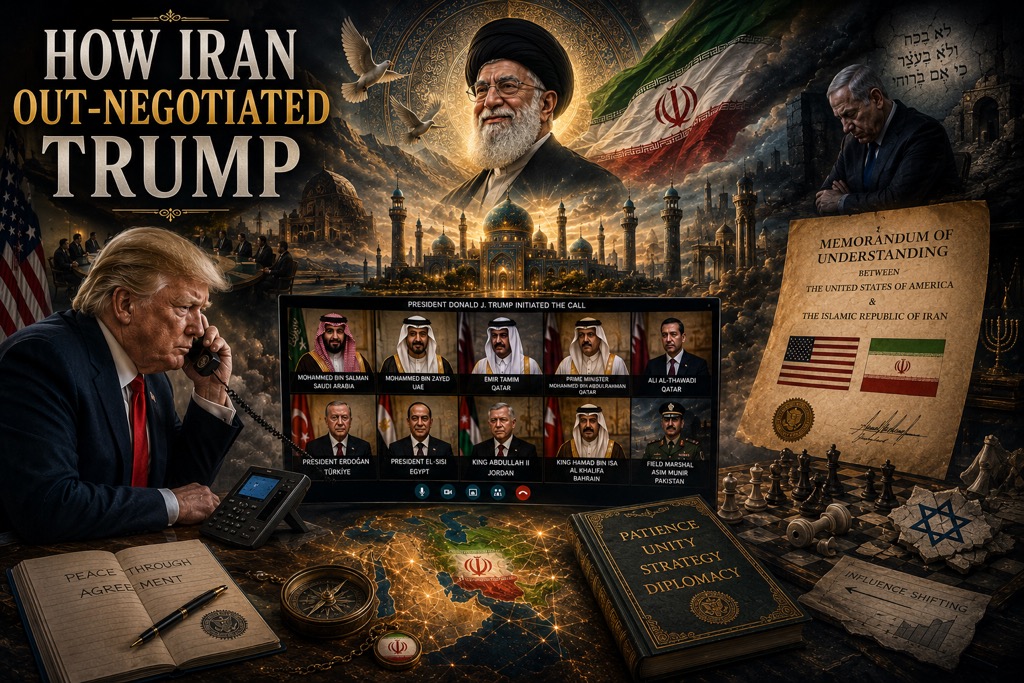
I am in the Oval Office at the White House where we just had a very good call with President Mohammed bin Salman Al Saud, of Saudi Arabia, Mohammed bin Zayed Al Nahyan, of The United Arab Emirates, Emir Tamim bin Hamad bin Khalifa Al Thani, Prime Minister Mohammed bin Abdulrahman bin Jassim bin Jaber Al Thani, and Minister Ali al-Thawadi, of Qatar, Field Marshal Syed Asim Munir Ahmed Shah, of Pakistan, President Recep Tayyip Erdoğan, of Türkiye, President Abdel Fattah El-Sisi, of Egypt, King Abdullah II, of Jordan, and King Hamad bin Isa Al Khalifa, of Bahrain, concerning the Islamic Republic of Iran, and all things related to a Memorandum of Understanding pertaining to PEACE.
An Agreement has been largely negotiated, subject to finalization between the United States of America, the Islamic Republic of Iran, and the various other Countries, as listed.
Separately, I had a call with Prime Minister Bibi Netanyahu, of Israel, which, likewise, went very well. Final aspects and details of the Deal are currently being discussed, and will be announced shortly. In addition to many other elements of the Agreement, the Strait of Hormuz will be opened. Thank you for your attention to this matter! President DONALD J. TRUMP